
In Ukraine, a classroom can be destroyed overnight. Yet even when schools are damaged, air raid sirens interrupt lessons, and children are forced underground, Ukrainian teachers continue to teach.
For millions of Ukrainian children, an ordinary school day can change in seconds. A lesson or school break can suddenly be interrupted by an air raid siren, forcing students to leave their desks and follow their teachers into shelters.
Since Russia’s full-scale invasion in February 2022, attacks on schools, repeated air raid alerts and power outages have profoundly disrupted education. In some communities, underground spaces have become classrooms where children continue learning despite the danger.
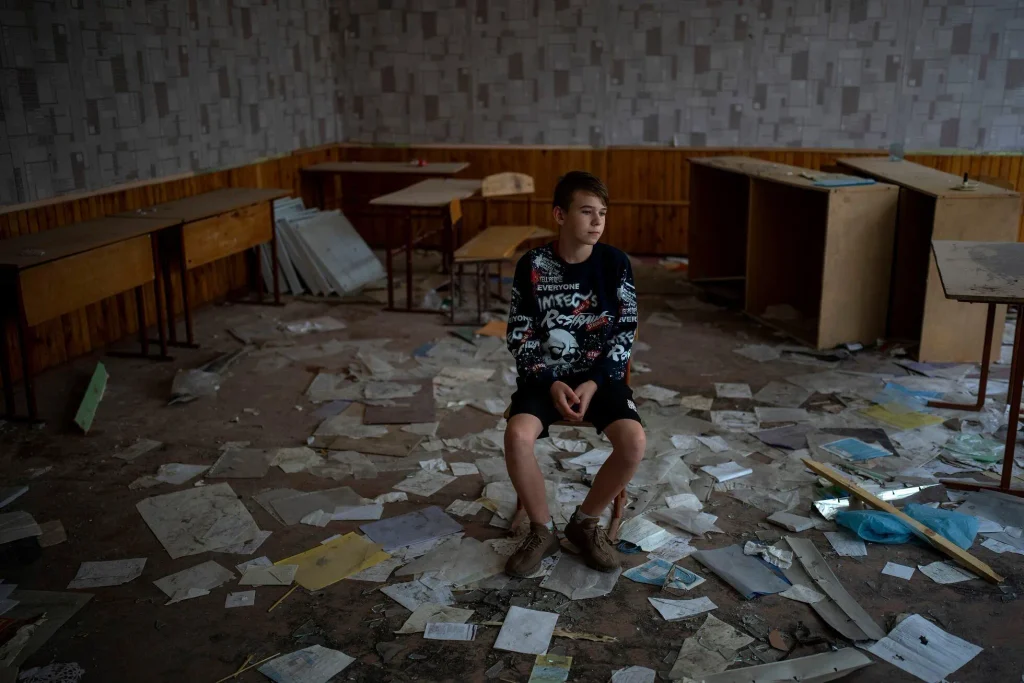
Thousands of Educational Institutions Damaged or Destroyed
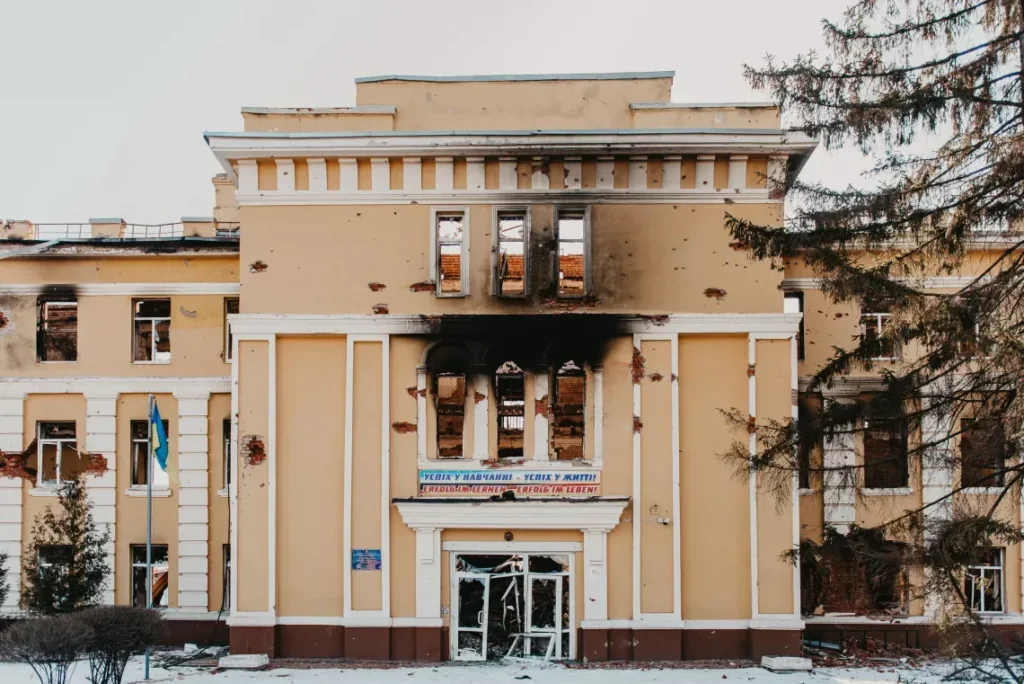
As of 20 September 2026, 4,278 educational institutions in Ukraine had been damaged and another 428 completely destroyed, according to figures published by the Education, Science and Innovation Committee of the Ukrainian Parliament.
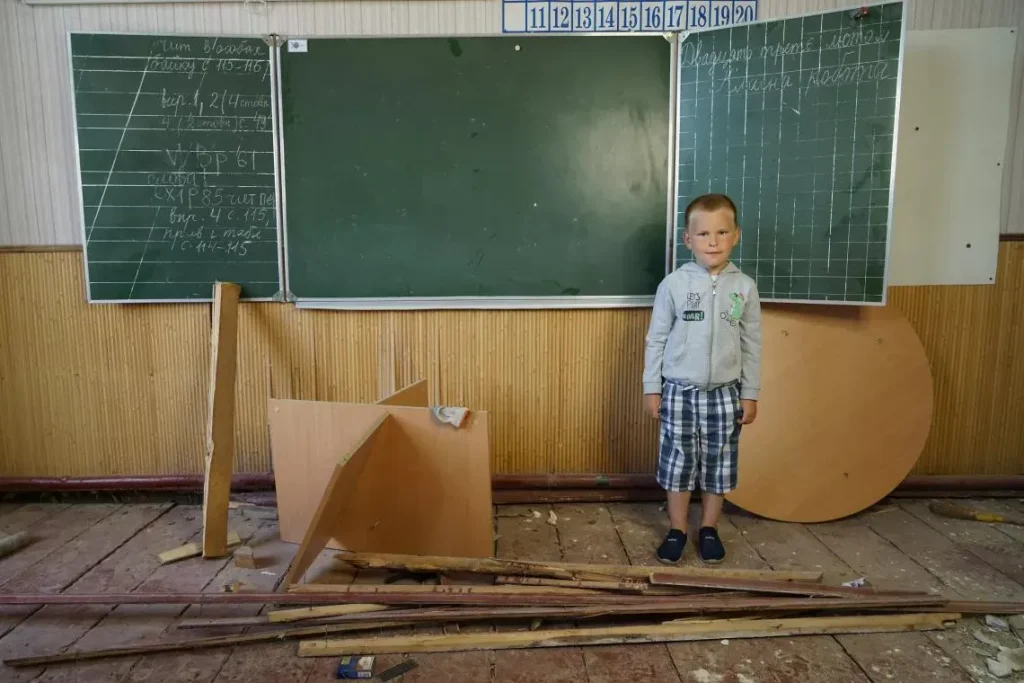
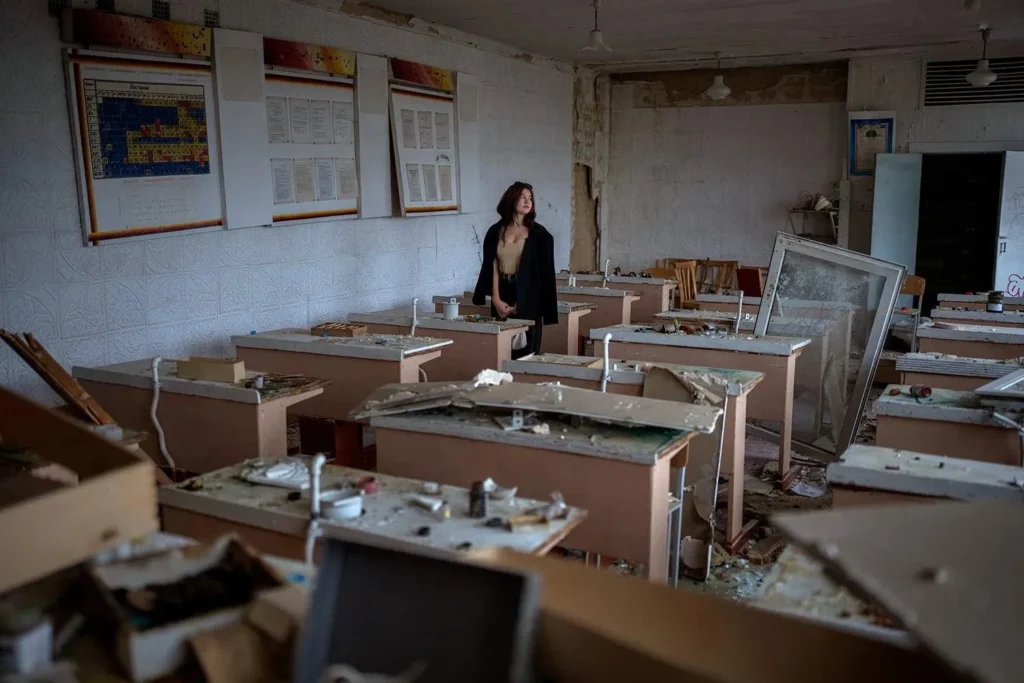
Behind these statistics are classrooms where teachers once welcomed students and created spaces for learning. Years of work and dedication can be destroyed by a single missile or drone attack.
For many teachers and students, returning to their former classrooms is no longer possible. Some schools have relocated or shifted to remote learning, while others have moved lessons underground.
The destruction of a school means more than the loss of a building. It disrupts children’s education, friendships and sense of stability.
When Air Raid Sirens Interrupt Lessons
The beginning of the 2026–2027 academic year showed how serious the situation remains. According to a UNICEF statement published on 15 September 2026, more than 1,000 air raid alerts were recorded across Ukraine during the first 15 days of September 2026, nearly twice as many as during the same period the previous year.
Every alert can interrupt lessons, forcing teachers to guide students into shelters and reorganise the school day around an unpredictable timetable.
According to a Save the Children analysis published in May 2025, Ukrainian students were estimated to have missed an average of one in five school lessons during the 2024–2025 academic year because of air raid alerts, with particularly severe disruptions in frontline regions.
Some lessons continue in shelters, while others are postponed or replaced with independent assignments. For many children, an uninterrupted school day has become increasingly rare.
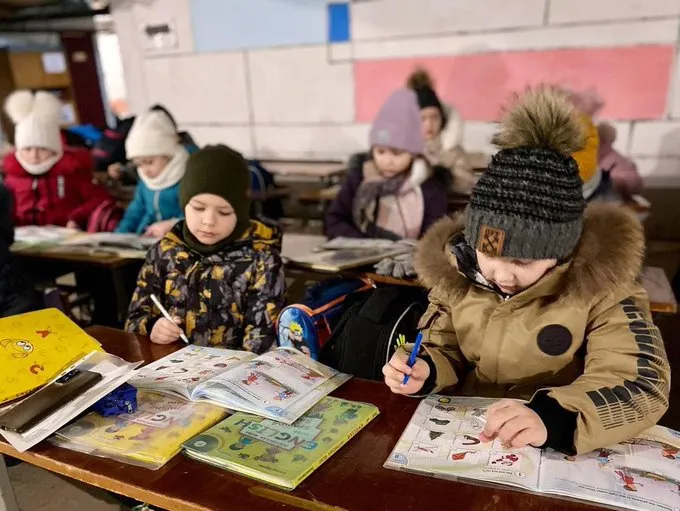
Children Forced to Study Underground
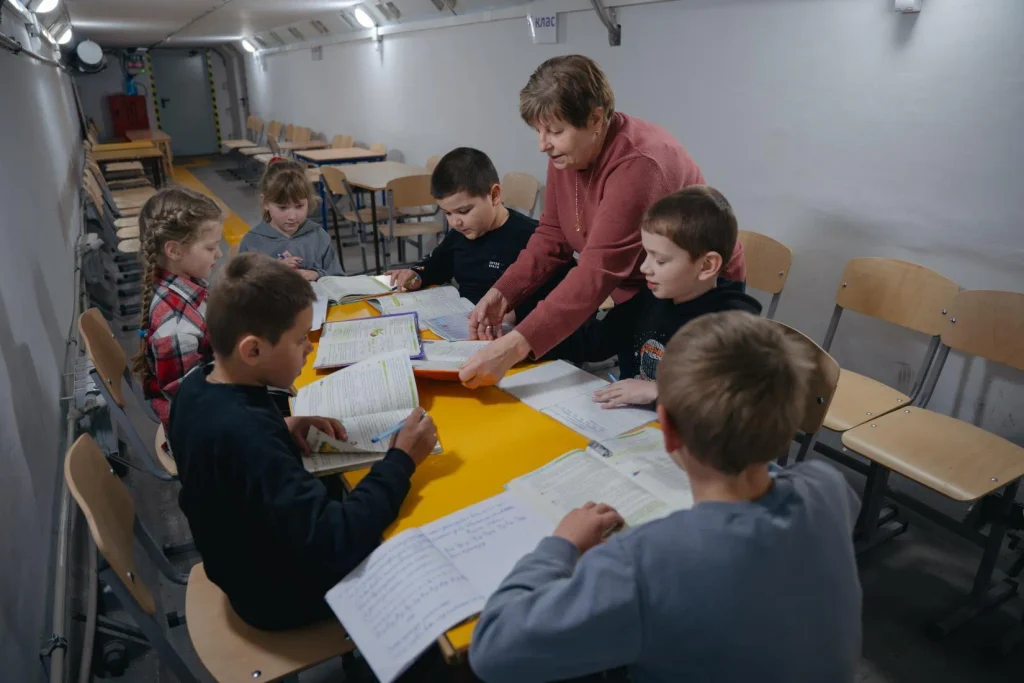
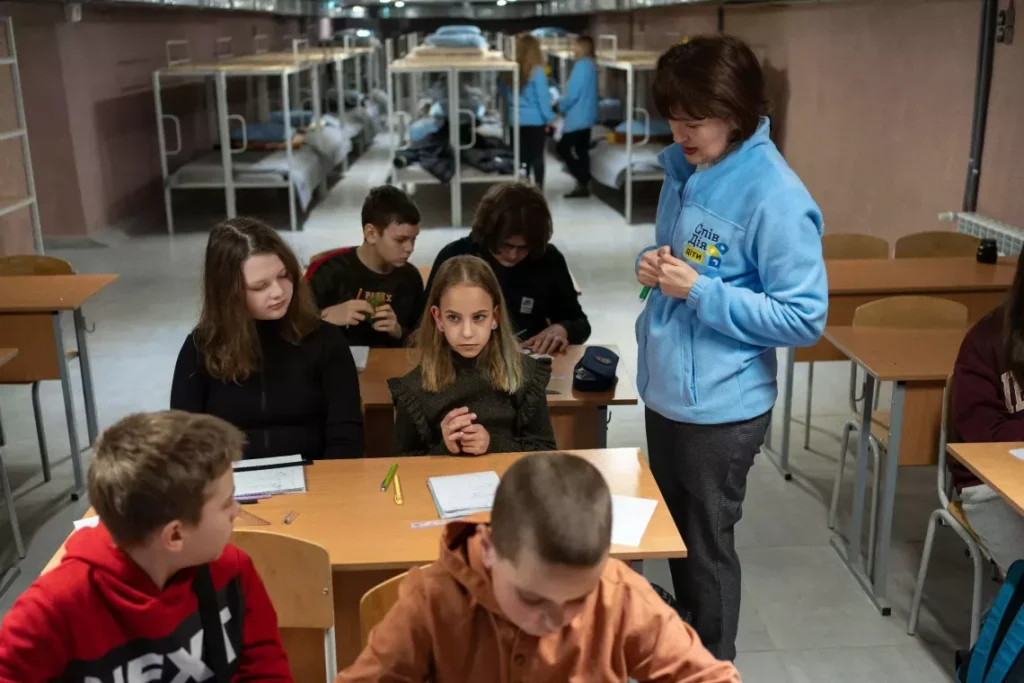
To preserve access to education, schools across Ukraine have adapted basements and protective shelters into learning spaces. Some have desks, heating, ventilation and internet access, allowing lessons to continue during air raid alerts.
In cities frequently exposed to attacks, including Zaporizhzhia, underground schools offer an alternative to prolonged remote learning and allow children to reconnect with teachers and classmates.
According to UNICEF’s September 2026 briefing, by mid-September 2026, the organisation had supported the establishment of 22 underground learning shelters in frontline communities.
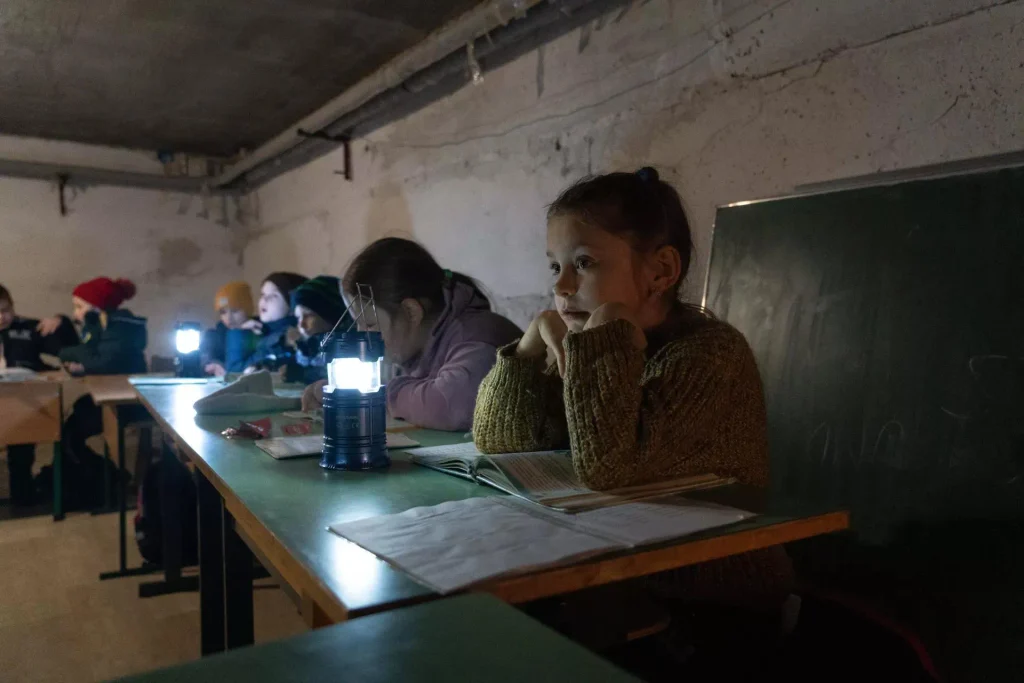
However, not every shelter is suitable for learning. As Save the Children has highlighted, classes can continue during alerts only when shelters are appropriately equipped. Some lack adequate lighting, heating, furniture or access to water, while others are overcrowded. Such conditions make it harder for students to concentrate and for teachers to conduct lessons.
For many Ukrainian children, going to school now means descending underground to find a place where learning can continue.
Learning How to Survive Alongside Mathematics and History
The war has changed what Ukrainian children must learn at school. Alongside traditional subjects, students receive safety education on how to recognise potentially dangerous explosive objects and respond if they encounter them.
As documented by Save the Children in its reporting on landmine risk education in Ukraine, emergency responders and specialists teach children how to avoid unexploded ordnance and follow safety procedures.
These lessons can save lives, but they also show how deeply the war has affected childhood.
No child should have to learn how to identify explosive objects in order to stay safe on the way to school or while playing outside.
The Hidden Consequences of Interrupted Education
The consequences extend far beyond missed lessons. As Save the Children has warned, repeated interruptions can create gaps in knowledge, affect concentration and contribute to anxiety, emotional exhaustion and sleep difficulties.
For children studying remotely, limited contact with classmates can also increase isolation and affect social development. School is not only a place to learn, but also where children build friendships and communication skills.
Access to safer education remains unequal. While some communities have equipped underground classrooms, others, particularly near the frontline, still lack sufficient protective infrastructure.
These inequalities risk affecting Ukrainian children’s development and opportunities long after the war.
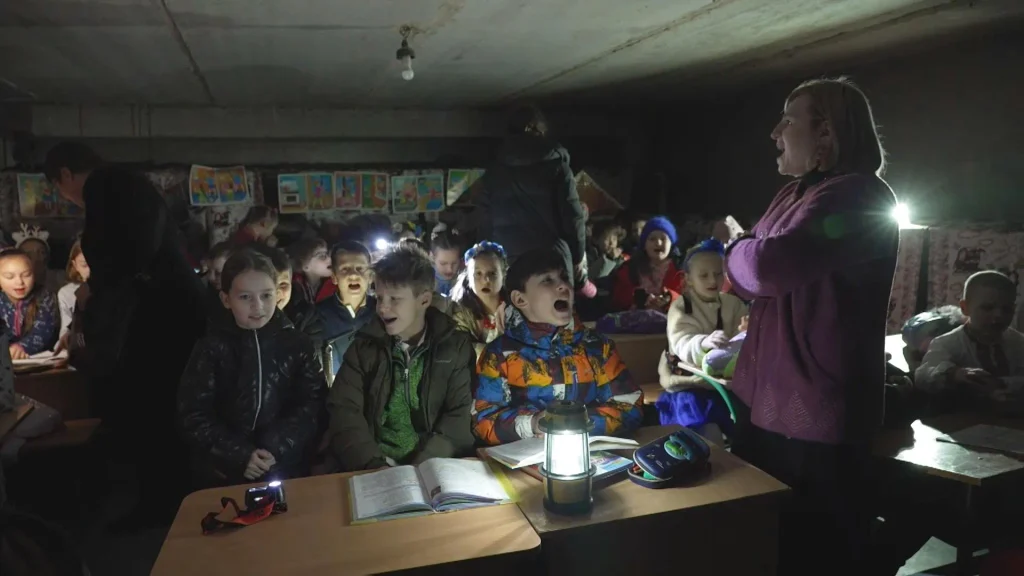
Teachers Who Continue Despite the Danger
For children growing up during war, teachers provide more than academic instruction. They offer emotional reassurance, connection and a sense of normality.
When air raid sirens sound, teachers guide students into shelters, help them remain calm and adapt lessons to underground classrooms, interrupted schedules and power outages.
They teach in shelters during air raid alerts. They teach in underground classrooms. They adapt during power outages.
They keep teaching.
Their determination helps children stay connected to education. However, supporting teachers and students also requires safe learning spaces, reliable infrastructure and psychological support.
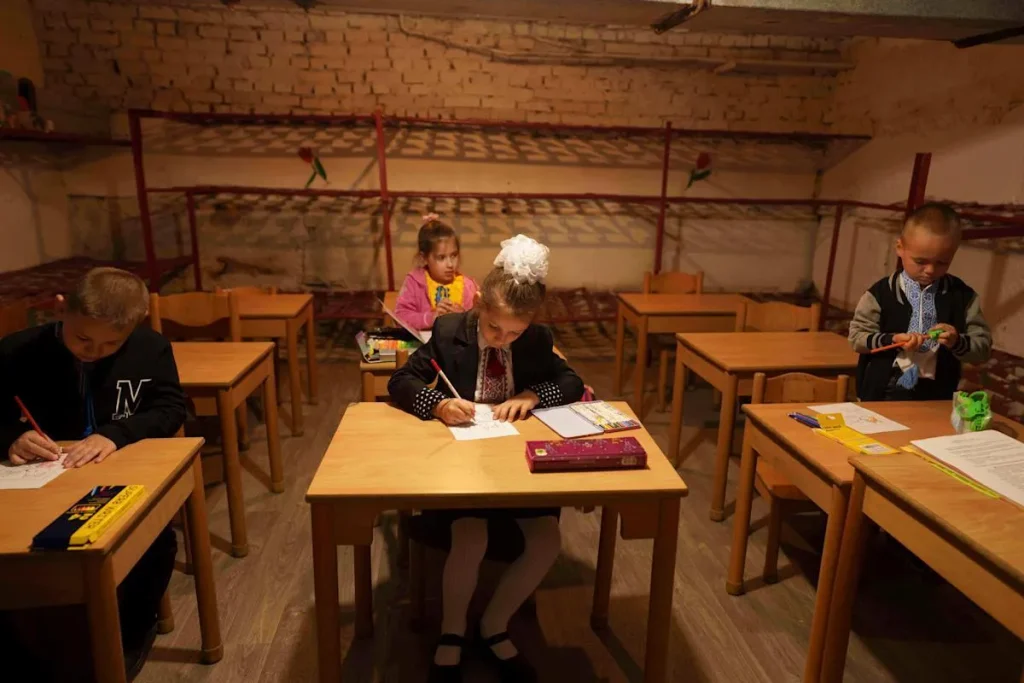
Protecting Children’s Connection to Education
At LUkraine asbl, supporting children’s education and well-being is part of a broader commitment to protecting Ukraine’s future.
Through initiatives such as the Ukrainian School Mriya in Luxembourg, the organisation helps children maintain their connection to Ukrainian language, culture and community.
For children affected by displacement and war, these initiatives provide opportunities to learn, connect with others and maintain a sense of belonging.
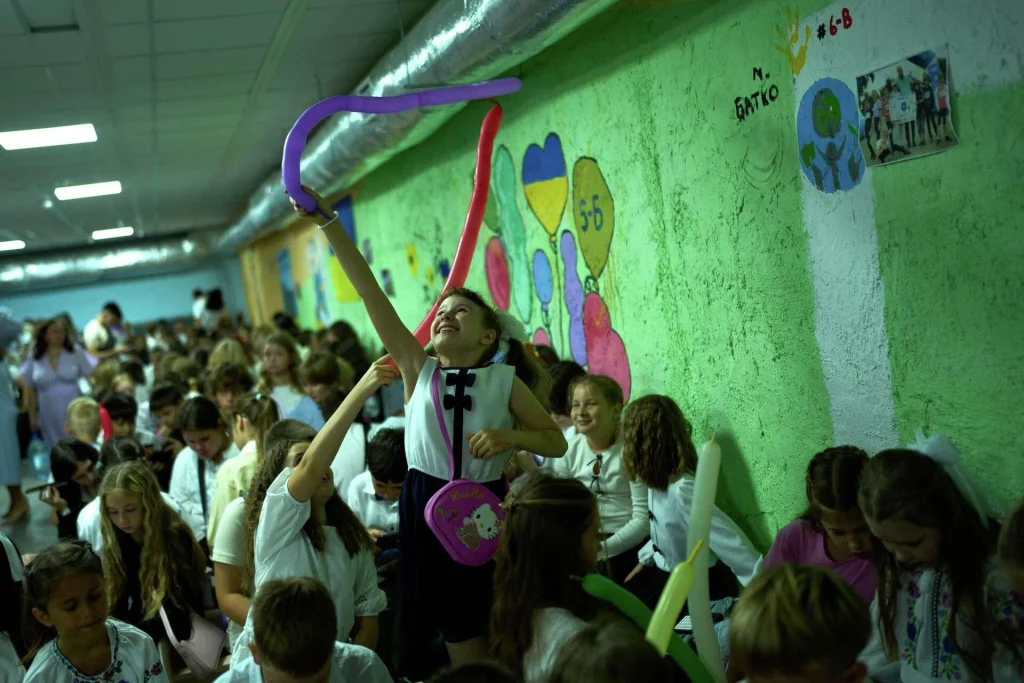
Children Deserve to Learn in Safety
Ukraine’s underground classrooms demonstrate the determination of teachers, families and communities to protect children’s right to education.
Yet they also reveal a painful reality: children are forced to study beneath the ground because the world above is not safe enough.
A school day should be measured in lessons, discoveries and friendships, not in air raid alerts and hours spent in shelters.
Ukrainian children deserve more than the opportunity to continue learning during war. They deserve the opportunity to learn in safety.